

It's Unavoidable
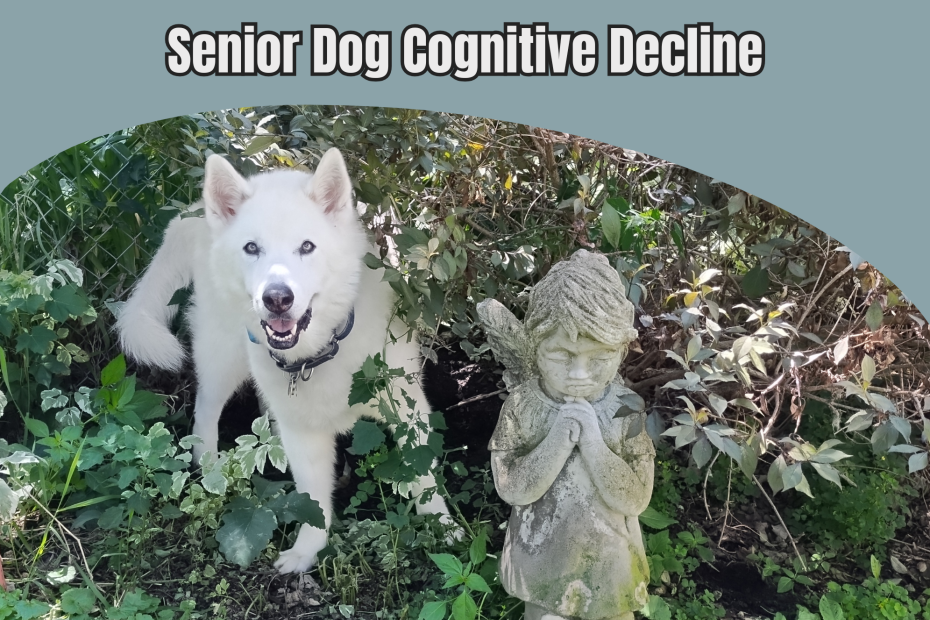
When Loki was younger, he was my shadow in motion.
I’d say his name and his head would snap toward me.
I’d ask for a sit and his butt would hit the ground before I finished the word.
Bright-eyed, bushy-tailed, tuned into every tiny shift in my body language.
He wasn’t just my dog. He was my training partner.
These days, it’s different.
I’ll ask him to do something and… there’s a beat. Sometimes two.
He’ll blink, look around, almost as if he’s checking the mental files. Then he’ll do it…but in his own time, like he’s sliding into an old habit instead of actively listening.
Every now and then, I catch that moment where the cue doesn’t quite land. Not because he’s stubborn. Not because he’s “blowing me off.”
It’s because my boy is 12½ years old.
And as much as I love his majestic face and slower pace, it’s also a quiet reminder:
Cognitive decline is real.
Our dogs’ brains age just like their joints do.
While it’s heartbreaking to watch, there is good news. We can do things to support them and, in many cases, help slow that decline.
That’s what this article is about—what’s happening in senior dog brains and how simple force-free games can keep those minds as bright and engaged as possible for as long as we get to walk beside them.
What Is Cognitive Decline in Senior Dogs?
Let’s start with the big question:
What’s the difference between “just getting old” and something more serious going on in your dog’s brain?
As dogs age, it’s normal for some things to change. They may:
- Sleep more
- Move a little slower
- Be less excited about chaos, kids, or the dog park
That’s aging.
Cognitive decline (often called canine cognitive dysfunction, or “doggy dementia”) is when changes go beyond “just old” and start to affect how your dog understands and moves through their world.
Guardians often notice things like:
- Your dog seems lost in familiar rooms
- They stand at the wrong side of the door, unsure what to do
- They wake up confused in the middle of the night
- They forget housetraining or well-known cues
Veterinarians sometimes talk about the DISHA pattern of signs:
- Disorientation – getting stuck in corners, staring at walls
- Interactions change – suddenly clingy or oddly distant
- Sleep–wake cycle shifts – pacing or restless at night
- House-soiling – accidents in a dog who was previously reliable
- Activity/Anxiety changes – pacing, whining, or seeming “checked out”
If you’re seeing some of these, it doesn’t mean you’ve failed your dog. It means their brain is aging, and they need support.
And this is where your vet becomes your teammate. Many medical issues (like pain, hearing loss, vision changes, or other diseases) can look like cognitive decline, so a good exam is step one.
From there, we can start stacking the deck in your dog’s favor by using games, routines, and gentle enrichment to keep that aging brain as bright and engaged as possible.
How Aging Changes Your Dog’s Brain (and Why Games Help)
Think of your dog’s brain as a busy city. In their younger years, the “roads” (neural connections) are well-paved, traffic flows smoothly, and messages zip from one neighborhood to another with ease. As dogs age, that city doesn’t shut down, but some roads get bumpy, some traffic lights glitch, and a few side streets may even close.
On a biological level, senior dogs often experience:
- Loss of neurons and synapses – Brain cells and their connections gradually decrease, especially in areas involved in memory and learning (like the hippocampus and parts of the cortex).
- Changes in brain chemistry – Levels of neurotransmitters (the brain’s chemical messengers) shift, which can affect mood, sleep, and attention.
- Slower information processing – Signals still travel, but not as quickly or efficiently as before, which is why older dogs may seem slower to respond or take longer to figure things out.
The good news? The aging brain is not a static, crumbling structure. It retains neuroplasticity—the ability to form new connections and strengthen existing ones—well into old age. And this is where games become more than “just play.”
Different types of enrichment light up different “neighborhoods” in the brain:
- Nose work taps into powerful olfactory pathways linked to memory and emotion. It’s kind of like taking the long scenic route through the brain instead of staying on the highway.
- Puzzle toys and problem-solving games engage the frontal regions that help with planning, attention, and persistence.
- Training and trick games activate networks involved in learning, motor control, and social bonding with you.
When we repeatedly activate these circuits in a positive, low-stress way, we’re essentially sending maintenance crews onto those neural roads to reinforce the ones still in good shape and build small detours around the ones that are wearing out. Over time, this kind of stimulation can help slow the functional decline of the brain, support better emotional regulation, and give senior dogs more of what they deserve: days that feel engaged, meaningful, and connected
Why Mental Enrichment Matters for Aging Brains
Here’s the simple version:
If we don’t give the brain a job, it quietly starts to shut down.
That’s true for us. It’s true for our dogs, too.
When dogs are young, life automatically keeps their brain busy:
- New smells
- New people and dogs
- New places to explore
- Training classes, playgroups, adventures
As they get older, a lot of that drops off. Walks get shorter. We “baby” them more. They spend more time sleeping, less time problem-solving.
On one level, that makes sense. Their bodies really do need more rest and less impact.
But on a brain level? Too much doing-nothing can speed up the very decline we’re afraid of.
Enrichment as Brain Support (Not Just Entertainment)
When we talk about mental enrichment, we’re really talking about giving the brain small, manageable challenges:
- Sniffing out a hidden treat
- Figuring out how to get food out of a puzzle toy
- Remembering how to do a simple trick
- Following a gentle pattern game with you
Each of these asks the brain to:
- Notice
- Think
- Decide
- Act
And every time your dog does that (especially in a way that feels safe and rewarding) they’re exercising the neural circuits involved in learning, memory, and emotional regulation.
It’s kind of like doing crossword puzzles, but in “dog language.”
The Sweet Spot: Calm Challenge
The magic is in the balance.
Too hard? Your dog gets stressed, confused, or shuts down. Too easy? The brain checks out and goes back to sleep.
Our goal with enrichment is calm challenge:
- Short, fun games
- Lots of “wins”
- No punishment for being slow, confused, or needing help
That sweet spot—just enough effort, plenty of support—can help slow mental decline, reduce anxiety, and give your senior dog something priceless:
A sense that life is still interesting, and they still know how to meet it.
How to Design Brain Games Your Senior Dog Will Actually Love
Before we dive into specific games, it helps to have a few guiding principles. Think of this as the “user manual” for your dog’s aging brain
1. Kindness First, Always
Senior dogs do not need to be “pushed” or “challenged” the way a coach might push an athlete.
- No scolding for getting it “wrong”
- No repeating cues in a frustrated voice
- No physically moving their body into position
If your dog looks confused, you help them. If they look worried, you back off. Games should feel like shared joy, not a test they can fail.
2. Adjust for Body and Senses
Older bodies and senses change how games feel.
- Arthritis? Use low-impact positions and non-slip surfaces.
- Vision loss? Lean more on scent and touch than on visual cues.
- Hearing loss? Use hand signals, body language, and vibrations (like a gentle foot tap).
Same brain, different access points.
3. Aim for “Just-Right” Challenge
Start easier than you think you need to.
- Make the first few reps so simple your dog can’t help but win.
- Gradually increase difficulty only if they’re engaged, curious, and still wagging.
- A good rule of thumb: If your dog is failing more than they’re succeeding, it’s too hard.
4. Short, Sweet, and Often
Think in 3–5 minute bursts, once or several times a day.
Stop while your dog is:
- Still interested
- Still relaxed
- Still able to succeed
Ending on a win keeps enthusiasm high for next time.
5. Let Your Dog Have a Say
Offer choices when you can:
- Which toy?
- Which mat to sniff?
- Do they want to keep going or walk away?
That sense of agency (“I get to choose”) is powerful for emotional health and keeps the brain engaged in a gentle, respectful way.
Game 1: “Find the Treats” Indoors
Start ridiculously easy.
- With your dog watching, place 5–6 treats on the floor.
- Say something like, “Find it!” and gently encourage them to sniff around.
- Celebrate every little success.
- Once that’s easy:
- Hide treats just behind table legs or chair legs.
- Place a few under the edge of a rug or towel.
- Use a snuffle mat or scatter them in a small area of the room.
You’re teaching your dog: “Using your nose makes good things happen.”
That’s brain work, confidence-building, and joy all in one.
Game 2: Box or Cup Search
This one adds a bit more problem-solving.
- Set out 3 boxes or cups.
- Let your dog watch you drop a treat under one.
- Release them with “Find it!” and let them sniff and investigate.
Over time, you can:
- Add more boxes
- Move them around the room
- Occasionally leave one empty so they really have to use their nose
Just remember: if they look confused, help them succeed. This is a game, not an exam.
Game 3: Turning Walks into “Sniffaris”
Many guardians rush walks, especially if their dog can’t go far anymore.
Instead, try this:
- Take a shorter walk, but build in sniff stops.
- When you reach a patch of grass or leaves, say “Go sniff!” and let them explore.
- You can casually drop a treat in the grass now and then and let them hunt for it.
From the outside, it looks like “just sniffing.” Inside the brain, it’s rich sensory data, problem-solving, and emotional regulation.
And for a senior dog, that can make the difference between a day that feels dull and a day that feels alive.
Puzzle Toys and DIY Food Games (That Don’t Overwhelm Your Senior)
If nose work is the “introvert” of brain games, puzzle toys are the curious extrovert.
They invite your dog to experiment:
- “What happens if I paw this?”
- “What if I nudge it with my nose?”
- “Oh… that’s how the food comes out!”
For a senior dog, that little burst of figuring it out is gold for the brain.
The key is choosing the right level of difficulty and adapting puzzles for older bodies.
Store-Bought Puzzles: How to Pick Senior-Friendly Options
Puzzle toys come in all shapes and styles:
- Rolling toys and Kongs
- Slide-and-lift board games
- Treat balls and wobblers
For senior dogs, look for:
- Easy levels – labeled “Beginner” or Level 1
- Larger openings – so food comes out with less effort
- Softer materials – kinder on aging teeth and jaws
If your dog has arthritis, avoid puzzles that require a lot of pawing or twisting. If they have vision issues, choose puzzles that don’t rely heavily on tiny moving parts or complex patterns.
And remember: you can always make a puzzle easier by pre-loading success.
- Unscrew a treat ball a little more so kibble falls out faster
- Prop flaps or sliders slightly open at first
- Start with a very high-value treat so the dog thinks, “Oh, this is worth it”
Easy DIY Puzzles You Can Make Today
You don’t need a shelf full of fancy toys. Your recycling bin is already a puzzle library.
Muffin Tin Game
- Drop treats in a few muffin tin cups.
- Place tennis balls or crumpled paper over the cups.
- Encourage your dog to move the “lids” to get the treats.
You can make it easier by:
- Leaving some cups uncovered
- Using fewer balls
- Helping with your hands at first
Towel Roll-Up
- Lay a towel flat.
- Sprinkle treats on it.
- Fold or loosely roll the towel so treats are hidden inside.
Your dog can paw, nibble, or nose the towel to unroll it. Great for dogs who enjoy gentle tugging and for guardians who enjoy easy cleanup.
Cardboard Treasure Hunt
- Lay a towel flat.
- Sprinkle treats on it.
- Fold or loosely roll the towel so treats are hidden inside.
Let your dog dig around, shred a bit (supervised), and celebrate the “finds.”
What These Puzzles Are Doing in the Brain
Every puzzle asks your dog to:
- Observe
- Experiment
- Adjust their strategy
That’s executive function work—planning, attention, trial-and-error—without any pressure.
If your dog seems:
- Frustrated
- Barky
- Walking away
That’s the puzzle saying, “I’m too hard.” Make it easier, help them find a few treats, and end on a win.
Because the goal isn’t to prove how clever your dog is. The goal is to give their aging brain a gentle workout and their heart the quiet satisfaction of, “I can still figure things out.”
Training Games & Trick Refreshers: Gentle Workouts for the Mind
When most people hear “training,” they picture obedience drills.
Sit. Down. Heel.
For senior dogs, we’re aiming for something very different: cooperative brain games, not boot camp.
Revisiting Old Cues (With Way More Treats)
One of the easiest ways to exercise your dog’s brain is to dust off the cues they already know:
- Sit
- Down
- Hand target (“touch”)
- Come
- Simple stays
But here’s the twist:
You’re not testing them. You’re celebrating them.
- Ask for a sit
- Mark and reward generously
- Keep it light, playful, and quick
Every time your dog remembers and responds, they’re reactivating old memory pathways and strengthening the “we still know how to communicate” bond between you.
If they hesitate or seem confused? No shame. Just help them and reward the effort.
Teaching Tiny New Tricks
Yes, senior dogs can still learn.
As long as their body is comfortable, you can teach simple new tricks like:
- Nose target to your hand
- Paw target to a mat
- Chin rest on your palm or a pillow
- “Boop” a target with their nose
Use shaping or capturing:
- Wait for a tiny movement in the right direction
- Mark it (“Yes!” or a click)
- Give a treat
This invites your dog to offer behavior, rather than be pushed into it. That active problem-solving is huge for their brain.
Keep sessions short and easy. Think 3–5 treats, then a break.
Pattern Games to Soothe and Focus
Pattern games are simple, predictable sequences that help dogs feel safe and organized:
- Toss a treat to the right, say a cue, toss to the left, repeat
- Count “1–2–3” in a calm voice and give a treat on “3”
- Hand-target → treat → pause → repeat
These games:
- Build anticipation in a good way
- Help anxious or restless seniors settle
- Exercise attention and timing without overwhelming them
The goal isn’t a perfect performance.
The goal is a few minutes where your dog’s brain gets to notice, think, choose, and succeed—right next to the person they trust most.
Adapting Games for Different Stages of Cognitive Decline
Not every senior brain is in the same place. The games that light up one dog might overwhelm another. So instead of a one-size-fits-all plan, think in stages.
Mild Cognitive Changes
Here, your dog may be:
- A little slower to respond
- Occasionally confused
- Still mostly “themselves”
For these dogs, you can:
- Introduce new puzzles and tricks
- Keep nose work and training games fairly playful
- Gently increase difficulty as long as they’re having fun
You’re building brain reserves—like putting a little extra in the bank.
Moderate Decline
Now you might see more:
- Night waking
- Getting stuck or lost
- Forgetting familiar routines
For this stage:
- Focus on familiar games they already understand
- Shorten sessions
- Offer more help and fewer moving parts
Think comfort + small wins, not big challenges.
Advanced Decline
At this point, the goal shifts. We’re not trying to “work out” the brain as much as we’re trying to soothe it.
- Gentle sniff games right in front of them
- Simple hand-feeding patterns
- Soft, predictable routines
If a game makes them anxious, it’s not the right game.
Measure success in:
- Soft eyes
- Relaxed breathing
- A tiny tail wag
Those moments of peace and connection are the victory.
When to Call Your Vet (and When to Ask for Extra Help)
Let’s be honest: It’s hard to tell where “normal old dog stuff” ends and “we should be worried” begins.
You’re with your dog every day. Changes can creep in so slowly that you don’t notice until one day you think,“Something just feels… off.”
That’s your cue to bring your vet onto the team.
Red Flags to Take Seriously
Schedule a vet visit if you’re seeing things like:
- Sudden changes in behavior or personality
- Getting stuck in corners or staring at walls
- New or frequent accidents in the house
- Pacing, panting, or restlessness at night
- Sudden clinginess or unusual withdrawal
- Startling more easily, seeming confused or “lost”
None of these automatically mean “dementia.” They do mean your dog needs a medical check-in.
Pain, arthritis, vision or hearing loss, infections, thyroid issues, and other illnesses can all mimic or worsen cognitive decline. Ruling those out (or treating them) is one of the kindest things you can do.
You Don’t Have to Figure This Out Alone
If your vet suspects cognitive decline, they may:
- Talk with you about medications or supplements
- Suggest diet changes that support brain health
- Refer you to a veterinary behaviorist or a force-free trainer
That’s not a sign things are “bad.” It’s a sign your dog now has a bigger support team.
And if you ever feel stuck (unsure which games to play, or how to adapt them for your dog’s body and brain) a qualified, science-based trainer or behavior consultant can help you build a custom enrichment plan.
You bring the love. We can help you bring the strategy.
A Brain-Healthy Day for Your Senior Dog
Let’s pull this all together and imagine a simple, realistic day for your senior dog’s brain.
Not a perfect day. A possible day.
Morning
- Short, gentle walk around the block
- Build in 2–3 sniff stops where you say, “Go sniff,” and let them explore
- Maybe drop a treat in the grass once or twice for a mini “find it” game
Your dog’s day starts with movement, scent, and small wins.
Midday
- 3–5 minutes of a nose work game indoors
- Simple “find the treats” under cups or in a snuffle mat
- Followed by a nap in their favorite safe spot
Brain on → brain off. That rhythm matters.
Afternoon or Early Evening
- A few training or trick refreshers
- Sit, hand target, or a chin rest
- Big praise, small reps, lots of cookies
Then, if they’re up for it, one easy puzzle game:
- A muffin tin with a few treats and some tennis balls
- Or a towel roll-up with snacks hidden inside
Before Bed
- A calm, predictable pattern game or hand-feeding routine
- Soft voice, slow movements, same order every night
You’re not trying to cram in activities. You’re sprinkling little moments of curiosity, connection, and success through the day so your senior dog’s brain doesn’t just grow older…
It stays engaged, seen, and loved.
Growing Old Together
Here’s the heart of it: You can’t stop your dog from aging. But you can shape how aging feels.
Tiny games. Short sniff breaks. Easy puzzles. A few minutes of “Hey buddy, let’s figure this out together.”
None of these will make your dog a puppy again. What they can do is:
- Slow down some of the fog
- Ease anxiety
- Add more moments of joy, curiosity, and connection to the time you have
Your dog doesn’t care whether you’re doing the “perfect” enrichment plan.
They care that you’re there. They care that life is still interesting. They care that their world hasn’t quietly shrunk to a bed and a food bowl.
So maybe the next step is simple:
Pick one game from this article.
Try it today.
Watch what lights up in your dog’s eyes.
And if you’d like help tailoring games to your senior dog’s body, brain, and personality, reach out—I’d be honored to help you design a plan so you can enjoy this chapter together for as long, and as fully, as possible.
Would You Like to Talk with Bo?
If you and your beloved dog are struggling, you don’t have to do it all alone. I work with a variety of behavioral and emotional issues and would love to hear what you need help with.
Go ahead and set up a free 30-minute phone assessment. Since you are under no obligation to work with me after we talk, this call is at no risk to you.
All you need to do is use the calendar below to claim a time slot on my call calendar. Then, pick up the phone when I call.
It’s that easy.
Follow Puppy Tutor Dog Training on Facebook for daily posts related to dog training.

Hi! I’m Bo McGuffee, owner of Puppy Tutor Dog Training. My mission is to make human dog training accessible and affordable.
If you are looking for a science-based and compassionate alternative to the more aggressive training styles out there, then you’ve found the perfect dog trainer for you and your dog.
Since I also work remotely, I can help you train your dog no matter where you are, and you get to take advantage of my economy pricing for private lessons.
Interested? Sign up on my call calendar for a free 30-minute assessment.