

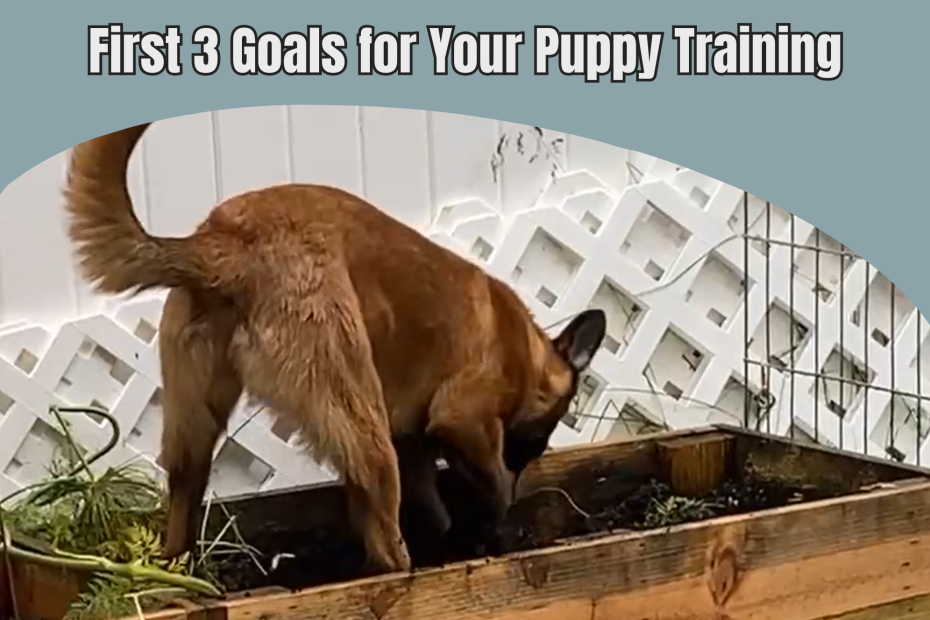
Brace Yourself. Here Comes the Puppy!
I still remember the first days after I adopted Puppy Loki.
He was bright, busy, and absolutely overflowing with energy. Like… (so, so) much energy.
Tiny shark teeth everywhere. Zoomies that appeared out of nowhere. Sheer chaos during the witching hour. Potty trips on repeat. And an intense, single-minded devotion to destroying anything within reach—with those pointy little needles in his mouth.
It was nonstop.
And I had to figure out how to survive it.
So I did what every overwhelmed puppy guardian does: I went searching for answers. I read book after book. I watched video after video. I fell into rabbit hole after rabbit hole.
And somehow it still felt like I never had enough information. Or worse, like I could spend an hour reading advice and come away more confused than when I started.
But I was motivated. I was going to figure this out for my puppy. And honestly? In order to survive Puppy Loki, I basically had to become a dog trainer. (Yes, this is how I stumbled into this profession.) And it’s a journey I will never forget.
If you’ve got a puppy right now, I’m guessing your life looks a lot like mine did:
Shark teeth. Rug-tugging. Pouncing. The sudden inability to “listen.” The feeling that your puppy is either asleep… or actively auditioning for a role as a tiny chaos gremlin.
And somewhere in the middle of all that, you’re trying to be a responsible human. You’re Googling. You’re asking friends for advice. You ask your vet. Then YouTube says something completely different. And somebody in a Facebook group is yelling, “You have to be the boss” (*cringe*, please, please, please don’t listen to this person).
So let me say this clearly…
If this is what you’re struggling with, you’re not failing. You’re raising a puppy.
This is part of what puppyhood is.
They’re chaotic by design. They’re new to this world. They’re learning how to have a body, how to live in a human house, how to regulate big emotions in a tiny nervous system, and how to make sense of a world that is basically one long sensory fireworks show.
I know it can feel like the deck is stacked against you. And if your goal is to get your puppy to comply with your every whim… it really is.
But what if you reframed what you’re trying to do?
What if you looked at it this way instead:
Success isn’t “perfect obedience.” Success is building foundations that make everything else easier later.
Adopt that mindset, and everything changes.
And in this article, I want to give you three goals to focus on with your puppy, goals that will change the whole game for your puppy and your family…
…even if your puppy hasn’t figured out how to “sit” on cue yet.
Looking for the Best Puppy Training in the Beloit, WI Area?
Then, you’re in luck. I have created the perfect puppy training course for you called The Complete Puppy Package. Through it, you will learn everything you need to become your dog’s own personal trainer and achieve the kind of success that works in real life, not just in a quiet living room with a pouch full of treats.
But what if you’re not in the Beloit, Wi area?
No problem. We can still work together over Google Meet.
So, set up that free assessment call today.
Don’t Focus on Obedience. Focus on Goals.
When people struggle with their puppies, their natural instinct seems to be to try to change the puppy’s behavior. It makes sense. After all, all that chewing, barking, pouncing, zooming, and destroying are behaviors. But there’s actually a better way to work with your puppy and achieve some semblance of harmony in the household.
Here’s a three-part framework I want you to focus on and remember:
- Attention and Engagement — can your puppy orient to you in real life?
- Trust — do humans reliably predict good things?
- Regulation — can your puppy settle and feel safe at home?
When you build layers of progress in these three areas, you tend to get fewer problems with biting, jumping, barking, leash chaos, “selective hearing,” and over-arousal.
Now let’s talk about each of these areas and how you can work with each of them.
Goal #1: Getting Attention and Engagement
I want you to teach your puppy how to “find you” in the middle of real life.
Keep in mind you’re working with a puppy. I know, it sounds a bit silly for me to say that, But seriously, it’s a lot harder to remember that when you’re working with a puppy than you may realize. It’s easy to see a “dog” in front of us and expect it to act more like an adult dog.
So, when I’m talking about getting some engagement from your puppy, what I’m talking about looks more like this…
Your puppy is sniffing, exploring, feeling the world… and then they check in with you.
That’s it. It’s a quick orientation. It’s those little “hey, you’re still there” moments. You want your puppy to form the habit of turning toward you when something changes.
Think about it this way: getting attention and engagement are the foundation for almost everything you want later—loose leash walking, recall, polite greetings, even calm behavior around distractions. After all, if you can’t get your puppy’s attention on you and keep it on you, you can’t reasonably expect your puppy to ever do anything you ask.
And here’s something about engagement I want to emphasize…
Engagement isn’t about obedience. It’s about participating in a relationship.
Your puppy doesn’t need to be “controlled.” They need to learn that you’re relevant.
And the fastest way to do that is with simple, fun games.
Attention and Engagement Games You Can Start This Week
You don’t need a complicated program. Pick a small menu and repeat it.
1) Touch-My-Hand (hand target)
- Present your open hand near your puppy’s nose
- The moment they touch it, say “yes” and give a reward
- Repeat until it becomes a reflex
This is a gentle, friendly “come toward me” behavior that you can use for redirection, movement, and focus.
Puppies tend to absolutely love this game. They get to run up and push “the button” with their nose. Note especially what I said there: “with their nose”. In other words, not their teeth. They are learning that when they touch you with their nose (and not their teeth) good things happen.
2) Treat Toss + Re-Orient
- Toss a treat a few feet away
- Puppy eats it
- The moment they look back at you, say “yes” and give them a reward…then toss another treat to start the game over again!
Super easy, isn’t it? Yet, this works on several levels. First, your dog is constantly checking in with you to see if you’re going to give/throw a treat. Second, when you throw a treat, they have to find it, which means a crash course in nosework, which exercises the brain. And third, they are learning that after they explore, they should automatically come back to you to make super awesome things happen.
3) Wander-with-Me (indoors first)
- Take one step away from your puppy
- Puppy follows, say “yes” and give a reward
- Add steps slowly
Think about what’s happening here. Every time your dog moves into your space, good things happen. If your dog chooses to stick with you while you move (rather than going off in a random direction), good things happen. Not only are you teaching your puppy that the most rewarding place in the world is right where you are, you are also teaching leash walking…without having to use a leash.
4) The 1-2-3 Pattern Game (predictability)
- Pour treats back and forth from hand to hand while you calmly count “1…2…3”
- Reward on 3
- Repeat while you move through the house
Puppies often get excited when they see treats come out. When the puppy sees you passing treats from hand to hand, they can’t wait. But, they have to wait until you say “3”. Your puppy will learn that nothing happens on 1 and 2, and they have to wait until 3. This is a predictable pattern game to help puppies regulate.
Bonus tip: If your puppy is jumping on you to get the treat, drop the treat on the floor rather than giving it directly to them.
Rules for Success (So This Stays Fun)
- Keep sessions 60–90 seconds
- Stop while your puppy is still winning
- Train before they melt down—overtired puppies don’t learn; they unravel and melt down.
Taking the Games on the Road into Beloit, WI
Start in the living room. Then the backyard. Then a quiet sidewalk. Then gradually busier places.
In Beloit, that might look like:
- a calm corner of a local park early in the morning
- a quiet trail on a weekday
- a slow walk on the sidewalks of side streets
- sitting on a park bench and practicing “treat toss + re-orient” while the world goes by
For what it’s worth, one of the places I like to go is the outfield of the ball diamond of Roosevelt Park by the Rising Tide Community Center.
Remember, you’re not proving your puppy can “behave.” You’re teaching them how to stay connected while they learn the world.
And please keep your puppy on a leash. You don’t want any accidents to happen.
Goal #2: Learning Trust Because Humans Predict Good Things
Here’s a truth that simplifies puppy training:
Your puppy is not primarily asking, “What do you want me to do?”
Your puppy is primarily asking, “Is this safe?”
So a huge part of early training is emotional learning: repeated experiences that teach your puppy that humans are predictable, safe, and worth paying attention to.
This is why you want to prioritize your puppy trusting you over your puppy obeying you.
Building a loving relationship with your puppy is primarily about how your puppy feels about you.
If you become a reliable source of good outcomes, training creates resonance. Your relationship becomes one of cooperation, not conflict.
Believe me when you teach your dog that humans are awesome (and not scary), this pays out big time in ways people don’t always expect: vet visits, grooming, guests, kids moving quickly, leash/harness, nail trims, and recall.
The “Name Game”
- Say your puppy’s name once
- When they look, say “yes” and reward
- Repeat in tiny reps throughout the day
You’re not “testing” them. You’re building a reflex:
Puppy hears name → “Oh! That’s a good thing! Let’s see who did it!” → look at human.
This creates a check-in habit you’ll rely on outside. If you want to make things extra fun when your puppy is really good at this, say their name from a distance, when they look at you cheer, then go right into the “Touch-My-Hand” game so they run right over to you.
Handling and Care: Make It Predictably Pleasant
If you do nothing else in early puppyhood, do this: Teach your puppy that being touched is safe.
A few examples:
- Collar grab → treat
- Touch a paw → treat
- Brief ear touch → treat
- Brush appears → treat
- Nail clippers appear → treat (even if you don’t clip yet)
This is the beginning of cooperative care—building comfort and consent around body handling so it doesn’t become a fight later.
Preventing the “Big Three” Relationship Problems Early
1) Resource Guarding Prevention (The Trade Game)
Instead of taking things from your puppy, practice trading instead:
- Puppy has a toy → you offer a treat → puppy releases → you give treat → toy returns
The lesson becomes: “Humans coming near my stuff is great,” rather than “humans steal.”
Now, here’s the big thing about this. You might think that the most powerful part of this game is the treat. It isn’t. It’s the “toy returns” part. Your dog is learning that giving up things to you doesn’t mean they are necessarily going to lose them, because they may even get them right back. So they not only get a treat, but the toy. It’s a total win!
2) Body Sensitivity
While practicing handling with care, you may notice your puppy pulling away. That’s your puppy using body language to tell you they don’t like what you are doing and they aren’t giving you consent to continue. That’s communication, not defiance. Please, honor it.
Now, note the area of sensitivity. Then, make working slowly toward being able to handle it super fun.
For example, if your puppy doesn’t want its paws handled, try this:
- Reach and almost touching the puppy paw (assuming the puppy doesn’t pull away), say “yes” and give a treat.
- Reach again and get closer, say “yes” and give a treat
- Keep reaching until you can barely touch the paw, say “yes” and give a few treats.
Continue until your puppy is enjoying the whole experience, right up through getting a nice paw massage.
And remember, it’s best not to do the whole thing at once. Spread it out over days.
3) Learning Fear
“Just let them get used to it” can backfire tremendously if the exposure to something is too intense. You want gradual exposure + positive association + choice, not overwhelming experiences.
If you overwhelm your dog, they may become afraid of whatever overwhelmed them. To be clear: You do not want this. Fear can lead to fear aggression later in life.
If you see that your puppy is starting to develop fear issues, you will want to work with it immediately. Go back to focusing on “when humans are near, good things happen”.
Goal #3: Regulating through Feeling Safe and Relaxed at Home
If I could give every puppy guardian one “secret,” it would be this: A huge percentage of puppy problems are actually sleep problems.
Puppies are wired to go-go-go… and they often don’t choose to rest on their own. That means you’re going to have to intervene and incorporate plenty of rest into the daily routine.
What “Safe at Home” Really Means
It doesn’t just mean “they’re fed and have toys.” It means your puppy doesn’t have to worry about danger in the environment, and that allows them to downshift:
- excitement → calm
- curiosity → rest
- frustration → recovery
And here’s the hidden benefit: Calmer puppies learn faster.
Setup Comes Before Training
If your puppy isn’t trained for a situation, then it’s up to you to manage the situation. Keep in mind that the more a puppy engages in a behavior, the more that behavior becomes a pattern. Managing the environment is how you prevent puppy chaos from turning into a habit.
Here are a few essentials you want to tackle right away:
- Puppy-proof zones
- Gates for containment when you can’t supervise closely
- Predictable rhythms: potty → play → train → chew → nap
By restricting access, you’re trying to prevent the possibility of rehearsing the stuff you don’t want:
- chewing furniture
- chasing kids
- counter surfing
- “stealing” socks (which is often just play)
Teach Calm Like It’s a Skill (Because It Is)
Capture Calm
When your puppy is chilling—even for two seconds—quietly drop a treat. No fanfare. Remember, the more you reinforce a behavior, the more often the behavior will appear. As you reinforce just chilling, your puppy gets used to just settling in and calmly waiting for the next treat.
Settle on a Mat
It’s awesome when you teach a dog to settle on a mat (and by “mat” I mean any surface for resting, which could mean dog bed or even couch).
- Treat for stepping onto the mat
- Then for sitting
- Then for lying down
- Then for staying there longer
This space becomes your “off switch” as your puppy starts to associate resting with being on it.
Calm Enrichment
Licking, sniffing, and chewing are activities that exercise parts of the brain that take your puppy out of their emotions, thus naturally improving regulation:
- lick mats
- stuffed Kongs
- snuffle mats
- safe chew items
Short “Off Switch” Reps
You want to set your puppy up for success. Rather than waiting for your puppy to lose it to start your calming practice, get ahead of the game. Practice 30–60 seconds of calm, multiple times a day when your puppy is partly there. After they calm down for a little while, they get to go back to play. Later, you can do it all over again.
The Common Mistake
A lot of families try to exercise a puppy into calmness. Sometimes that works… short term.
But often it creates an endurance athlete: a puppy who needs more and more stimulation to finally crash.
A better recipe is: sleep + decompression + small training games.
And yes—sleep is a big deal. Many puppies through 6 months old sleep from 16–20 hours a day, depending on their age (with younger puppies needing more and older puppies needing less).
Micro-Checklist (Save This)
- Is my puppy getting enough sleep? (often 16–20 hours/day total)
- Do they have a calm zone where nobody bugs them?
- Am I quietly rewarding calm?
- Do we have a rhythm that prevents overtired chaos?
Let’s Retire a Few Ideas That Make Puppyhood Harder Than It Needs To Be
I’m going to put this right out there: There is a LOT of bad advice online.
You have to be selective when looking for information, but if you’re looking for information you don’t always know what to avoid. To help you in your search, I want to dispel a few myths that can potentially harm the development of your puppy.
Myth #1: “You have to be the boss/alpha.”
This is based on old, very out-of-date science. To be honest, I don’t even consider those who rely on this framework to be “dog trainers”, but “bullies. I’ve written a separate article about this entitled “Leadership vs Bullying in Dog Training”.
Significantly, modern veterinary behavior guidance strongly favors reward-based training and actively warns against aversive methods that rely on force, pain, or intimidation.
Myth #2: “You’re puppy is manipulating you.”
In a sense, yes, they are. They are learning that they can get you to do things for them. That’s actually a good thing. That’s your puppy learning how to navigate life. Yes, learning, not some form of moral scheming. As your puppy learns how to get things, it gives your puppy a sense of control, which increases confidence. And you want your puppy to grow into a confident dog.
Myth #3: “Ignore fear so they toughen up.”
Your puppy will learn fear fast when exposed to scary experiences. Rather than keeping your dog in a scary situation, you want to gradually expose your puppy and ensure you’re creating positive associations. This is what socialization is all about. You’re better off with gradual exposure and positive associations.
Myth #4: “Punishment teaches respect.”
Bottom line: You never have to use intimidation, fear, pain, or violence with a dog to train it. When you do, you are not actually teaching respect; you are teaching fear. While that fear may suppress an unwanted behavior, it doesn’t teach the dog a better one. And, it can undermine the trust your puppy has in you, which is the foundation of your relationship. If you want your dog to love and respect you, the tools you want to use are found in reward-based training that teaches desired skills and builds emotional safety.
Myth #5: “Socialization means meeting everyone.”
Real socialization is calm exposure, positive association, and choice—especially during that early window when puppies are most able to adapt safely. The goal is to have a positive experience around people. (Remember, “humans predict good things”.) If you are forcing your puppy to meet people in ways that scare your puppy, it can backfire. They can learn that “strangers predict bad things”. This can lead to a dog who is reactive toward strangers later in life. So, it’s not about “meeting everyone”. It’s about having positive experiences around everyone.
“Okay, But What About…” Common Puppy Problems (Mini FAQ)
Puppy Biting/Nipping
Very often, the problem is: overtired + over-aroused.
Try this:
- more sleep (seriously)
- short engagement games (Goal #1)
- calm chew enrichment (Goal #3)
Potty Training Accidents
Usually: not enough supervision + not enough trips.
A simple rhythm beats frustration:
- outside after waking, after play, after eating, and every 30–60 minutes early on
- As the puppy grows, remember to go out regularly. Here’s your formula for the time: Only expect your puppy to hold it for 1 hour per month of puppy age
Jumping on People
Teach an incompatible greeting:
- four paws on the floor earns attention
- meanwhile, jumping makes attention pause
And build alternative engagement games so your puppy has something else to do with their excitement.
Whining in the Crate/Pen
Don’t make “crate” mean isolation and panic. It’s not meant to be their prison, but their favorite den.
Build it gradually:
- feed meals in there
- toss treats in and let them come out
- short calm sessions when they’re already sleepy
Pulling on Leash
Start with engagement indoors and in low-distraction places:
- Follow-Me
- Hand target
- Treat toss + re-orient
Barking at Noises
Focus on safety and “noise predicts good things”:
- noise happens → treat appears.
Over time: “weird sound” becomes “oh good, snacks.”
Want a Clear Path Forward for Your Puppy in the Beloit, WI Area?
If you’re looking for the best puppy training in the area, you’re looking for my Complete Puppy Package. This 7.5 session package does far more than just teach your puppy manners. It actually teaches you how to train your dog yourself without having to rely on a trainer in the future for any of your basic dog-training needs.
Through this course, you will learn the basic principles, concepts, and techniques of modern, science-based dog training that you can use throughout your family dog’s life.
This is not a group course. I specialize in private lessons so you know you are getting the best training and support possible as you integrate your new puppy into your family’s life.
And remember, while I offer top-notch, professional dog training, you can get access to it at economy pricing.
So, if you want to learn how to train your puppy yourself without using harsh methods, intimidation, or “quick fixes” that create bigger problems later, then set up a free assessment call with me.
Remember, you don’t need behavioral perfection.
You need a plan that starts you off in the right direction and takes you into a joyful future with your beloved canine companion.
Note: If you are not in the Beloit, WI area, I can work with you remotely over Google Meet. So don’t let distance keep you from setting up that call.
Keep in Mind the Three Goals that Make Everything Easier
If you remember nothing else, remember this:
- Attention and Engagement: teach your puppy how to find you in real life
- Trust: teach your puppy that humans predict good things
- Regulation: teach your puppy how to settle and feel safe at home
You’re not behind—your puppy is learning every day.
If you want help building a plan that fits your puppy and your life in Beloit, WI, reach out through the call calendar below and ask about The Complete Puppy Package.
Follow Puppy Tutor Dog Training on Facebook for daily posts related to dog training.

Hi! I’m Bo McGuffee, owner of Puppy Tutor Dog Training. My mission is to make human dog training accessible and affordable.
If you are looking for a science-based and compassionate alternative to the more aggressive training styles out there, then you’ve found the perfect dog trainer for you and your dog.
Since I also work remotely, I can help you train your dog no matter where you are, and you get to take advantage of my economy pricing for private lessons.
Interested? Sign up on my call calendar for a free 30-minute assessment.